AStateIndependent states
Republic of Uzbekistan
The most populous Turkic state of Central Asia. It declared independence on 31 August 1991. Population 38.2 million; capital Tashkent.
Uzbekistan covers about 448,900 square kilometres and borders Kazakhstan, Kyrgyzstan, Tajikistan, Turkmenistan and Afghanistan — the only state bordering all four other Central Asian countries. With Liechtenstein it is one of the world's two doubly landlocked countries. According to the National Statistics Committee, its population on 1 January 2026 was 38,236,704. The capital is Tashkent, the state language Uzbek and the currency the som.
History
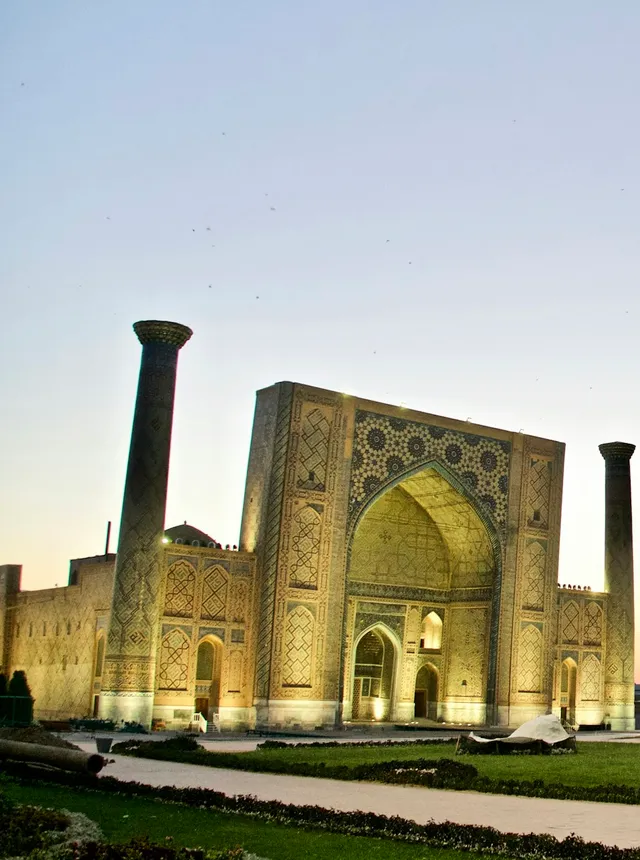
These lands were home to ancient Sogdiana, Khwarazm and Bactria, and Samarkand, Bukhara and Khiva were among the richest Silk Road cities. After the Samanids and Karakhanids came the Mongol conquest; in 1370 Amir Timur built a great empire from Samarkand, followed later by the khanates of Bukhara, Khiva and Kokand.
In the second half of the 19th century the region was conquered by the Russian Empire, and in the early 20th century the Jadid reformers led an educational movement. The Uzbek SSR was formed in 1924. Uzbekistan declared independence on 31 August 1991, and Independence Day is celebrated on 1 September.
Geography
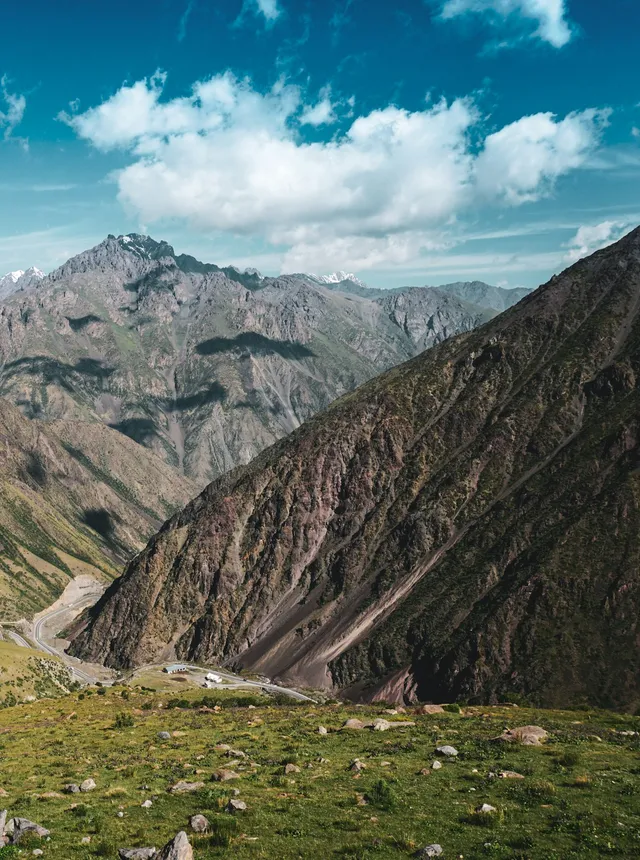
Much of the country is taken up by the Kyzylkum desert and plains, while the Tian Shan and Pamir-Alay mountains and the densely populated Fergana Valley lie in the east. The highest point is Khazret Sultan (4,643 m). The Amu Darya and Syr Darya are the main rivers, and the Republic of Karakalpakstan lies in the north-west.
Government and economy
Uzbekistan is a presidential republic with a parliament called the Oliy Majlis; a new constitution was adopted by referendum in 2023. It is a member of the Organization of Turkic States. The economy rests on natural gas, gold, copper, uranium, cotton, fruit and vegetables and textiles, and tourism is growing fast.
Sources
Updated: October 3, 2026