





AHistoryIndependent states
The Timurid and Mughal dynasty
The line of Timur of the Barlas tribe, which ruled for five centuries as the Timurids in Samarkand and Herat and as the Mughals in India (1370-1857).

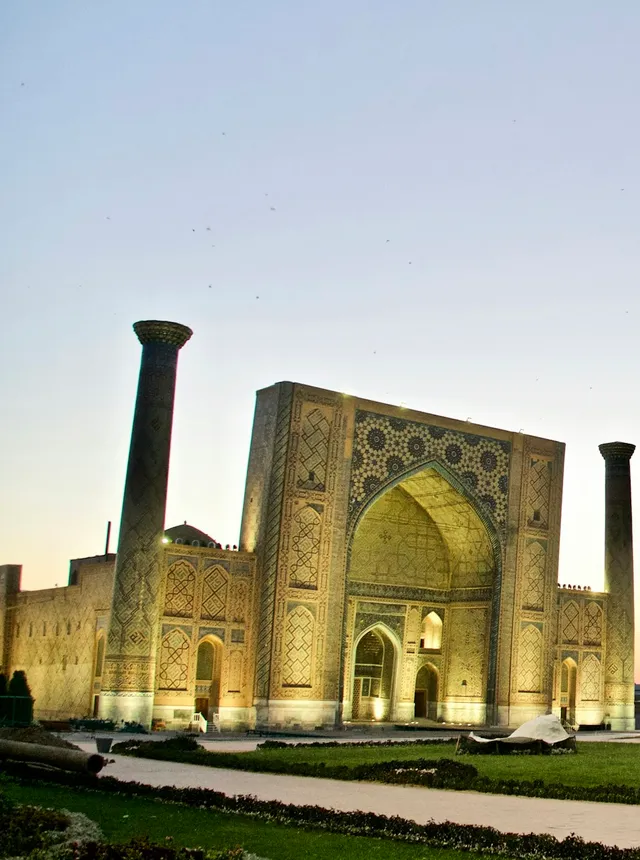
Timur came from the Turkicised Barlas tribe and took power in Transoxiana in 1370. After his death his sons and grandsons fought over the inheritance: his youngest son Shah Rukh ruled from Herat and his grandson Ulugh Beg from Samarkand. In the late 15th century Husayn Bayqara's court at Herat gathered masters such as Navoi, Jami and Behzad, but in 1507 the Timurids lost Transoxiana and Khorasan to the Shaybanids.
Babur, of Timur's Miran Shah line, left Fergana, took Kabul and after his victory at Panipat in 1526 founded the Mughal Empire in India. Under his grandson Akbar, and then Jahangir, Shah Jahan and Aurangzeb, the empire united most of the subcontinent. The last ruler of the line, Bahadur Shah II, was deposed and exiled by the British after the rising of 1857.
Family tree
Numbers give the order of accession. A solid line runs from father to son, a dashed line to a more distant descendant. Click a portrait to open the ruler's article.
- Timur1370-1405
- Umar Shaikh
- Bayqara
- Mansur
- Husayn Bayqara1469-1506
- Miran Shah
- Khalil Sultan1405-1409
- Muhammad Mirza
- Abu Sa'id Mirza1451-1469
- Umar Shaikh Mirza II
- Babur1526-1530
- Humayun1530-1540, 1555-1556
- Akbar1556-1605
- Jahangir1605-1627
- Shah Jahan1628-1658
- Aurangzeb1658-1707
- Bahadur Shah I1707-1712
- Jahandar Shah1712-1713
- Alamgir II1754-1759
- Shah Alam II1759-1806
- Akbar II1806-1837
- Bahadur Shah II1837-1857
- Miran Shah
- Shah Rukh1405-1447
- Ulugh Beg1447-1449
 1
 6
 7
 9
 11
 4
Sources
Updated: November 16, 2026