
















Life
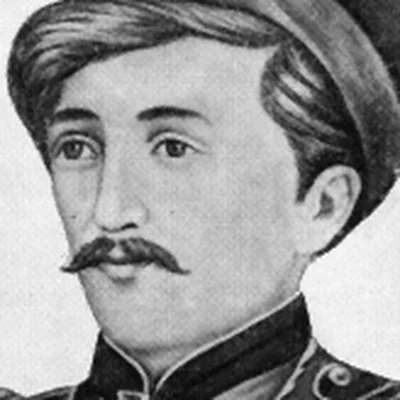
Abbasgulu Agha Bakikhanov was born in 1794 in the village of Amirjan near Baku, a descendant of the khans of Baku. His family later moved to Amsar near Guba. He learned Arabic and Persian, then Russian, and served for many years in Tbilisi as a translator and officer, rising to the rank of colonel. He set out on the pilgrimage to Mecca in 1846 and died of the plague near Mecca in 1847.
Scholarship and writing
Bakikhanov was an encyclopaedic scholar. His Gulistan-i Iram, completed in 1841, was the first major work to tell the history of Shirvan and Daghestan from ancient times to 1813 on a scholarly basis. He also wrote Asrar al-Malakut on astronomy, Kashf al-Gharaib on the discovery of America, a Persian grammar (Qanun-i Qudsi) and a book on ethics (Tahdhib al-Akhlaq).
Under the pen name Qudsi he wrote poetry in Azerbaijani, Persian and Arabic. His story Kitabi-Asgariyya is one of the earliest examples of Azerbaijani prose.
Legacy
Bakikhanov is regarded as the founder of modern Azerbaijani historiography. His house museum stands in Amsar near Guba, and a settlement in Baku bears his name.