







Life
His real name was Afzal al-Din Ibrahim ibn Ali. He was born in 1126 near Shamakhi. His father was a carpenter and his mother a convert from Christianity to Islam. From childhood he was raised by his learned uncle Kafi al-Din Umar, who taught him Arabic, medicine and astronomy. He then studied under the poet Abu'l-Ula Ganjavi.
He became a court poet of the Shirvanshah Manuchihr III and received the pen name Khaqani from the court. He made the pilgrimage to Mecca twice. Tired of court life, he tried to leave Shirvan and was for a time imprisoned in the fortress of Shabran. He spent his last years in Tabriz, where he died in 1199. He is buried in the Tomb of Poets (Maqbarat al-Shu'ara) in Tabriz.
Work
He wrote in Persian and is regarded as one of the greatest masters of the qasida. His language is rich and his images complex, weaving together medicine, astronomy, religion and philosophy. His ode on the ruins of Ctesiphon (Mada'in) is counted among the masterpieces of Eastern poetry.
The narrative poem Tuhfat al-Iraqayn records his pilgrimage and also gives valuable details about his childhood, family and teachers. The poems he wrote in prison and his elegies for his son Rashid al-Din are among his most moving works.
Legacy
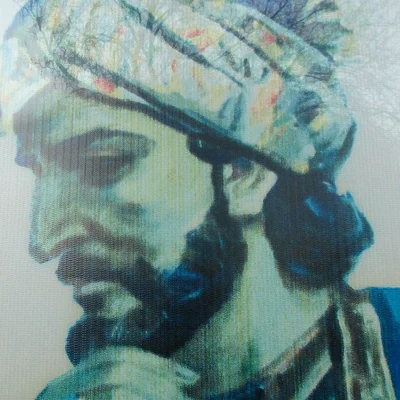
Khaqani is the summit of the Shirvan literary school, and his poetic language influenced poets across the East for centuries. Streets and parks in Azerbaijan bear his name, and statues of him stand in Shamakhi and Tabriz.