














Life
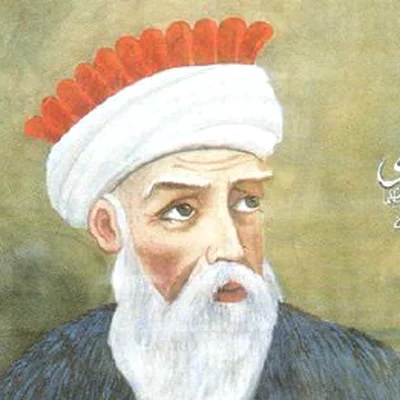
Muhammad Fuzuli, son of Suleyman, was born in 1494, most probably in Karbala in Iraq, into a family of the Bayat tribe of the Oghuz. He spent his whole life in Iraq, in Karbala, Baghdad, Najaf and Hillah. He was deeply educated, studying Arabic and Persian, philosophy, astronomy, medicine and mathematics. He died of the plague in Karbala in 1556.
Work
Fuzuli wrote in three languages, Azerbaijani Turkic, Persian and Arabic, but it is his work in his mother tongue that made him immortal. His Layla and Majnun of 1536 is counted among the most moving versions of the story. The ghazals of his Turkic divan are the finest expression of love and suffering, and his Water Qasida is one of the jewels of Eastern poetry.
With his Letter of Complaint Fuzuli showed he was also a master of prose: unable to obtain a promised pension, he describes the bureaucracy with fine humour. Its line "I greeted them, but they did not accept it, saying it was not a bribe" is still quoted today.
Legacy
Fuzuli is one of the poets who did most to shape the Azerbaijani literary language, and his works have been read for centuries in Azerbaijan, Türkiye and among the Iraqi Turkmen. Uzeyir Hajibeyli's opera Layla and Majnun of 1908, the first opera of the Muslim East, is based on his poem. A town and district in Azerbaijan bear his name.